Rajshahi silk is a high-quality mulberry silk produced in the Rajshahi division of northwestern Bangladesh, particularly in the districts of Rajshahi, Chapai Nawabganj, and Natore. What sets Rajshahi silk apart is its unique golden-yellow hue, which is not dyed but is the natural color produced by specific hybrid silkworms (Bombyx mori) fed exclusively on the leaves of the "Rongon" mulberry tree variety, which grows abundantly in the region's alluvial soil.
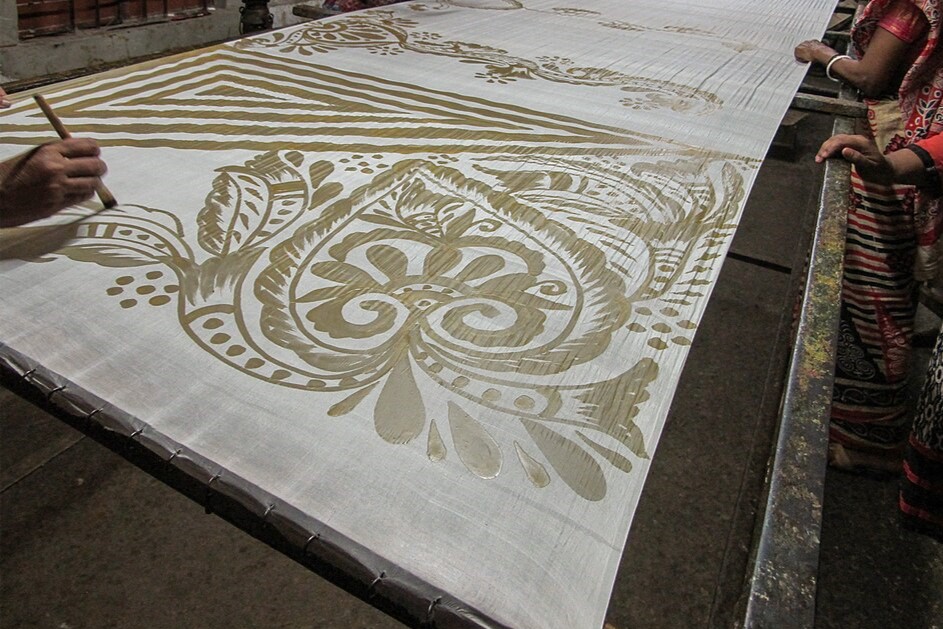
The silk industry in Rajshahi dates back to the British colonial era, when the East India Company established sericulture centers to supply raw silk to Europe. After the partition of India in 1947, and later the Liberation War of 1971, the industry declined. However, the Bangladesh Sericulture Development Board revived it in the 1980s. The process is entirely traditional: silkworms are raised on mulberry farms; the cocoons are boiled; and the silk filaments are hand-reeled on wooden charkhas (spinning wheels). The yarn is then hand-woven into sarees, scarves, and traditional Panjabi (kurtas).
Rajshahi silk sarees are particularly famous for their lightweight feel, natural sheen, and durability. Unlike Chinese or Indian silks, which often feel stiff, Rajshahi silk is breathable and drapes softly, making it ideal for Bangladesh's humid climate. The sarees often feature intricate gold zari (metallic thread) work, traditionally done with real silver wire coated in gold. However, due to cost, most contemporary versions use copper or polyester zari.
Bangladesh applied for GI status for "Rajshahi Silk" in 2018, and it was granted in 2020. The GI certification protects against counterfeit "Rajshahi silk" produced in other regions using synthetic fibers or inferior silk. The status has opened export opportunities to Japan, South Korea, and Italy, where natural silk is highly valued. However, the industry faces challenges: silkworm disease, rising mulberry leaf prices, and competition from cheap Chinese silk. The government has established a "Silk Village" in Rajshahi city, offering subsidized silkworm eggs, mulberry saplings, and training. With proper support, this 150-year-old heritage industry can once again flourish as a symbol of Bangladeshi craftsmanship.