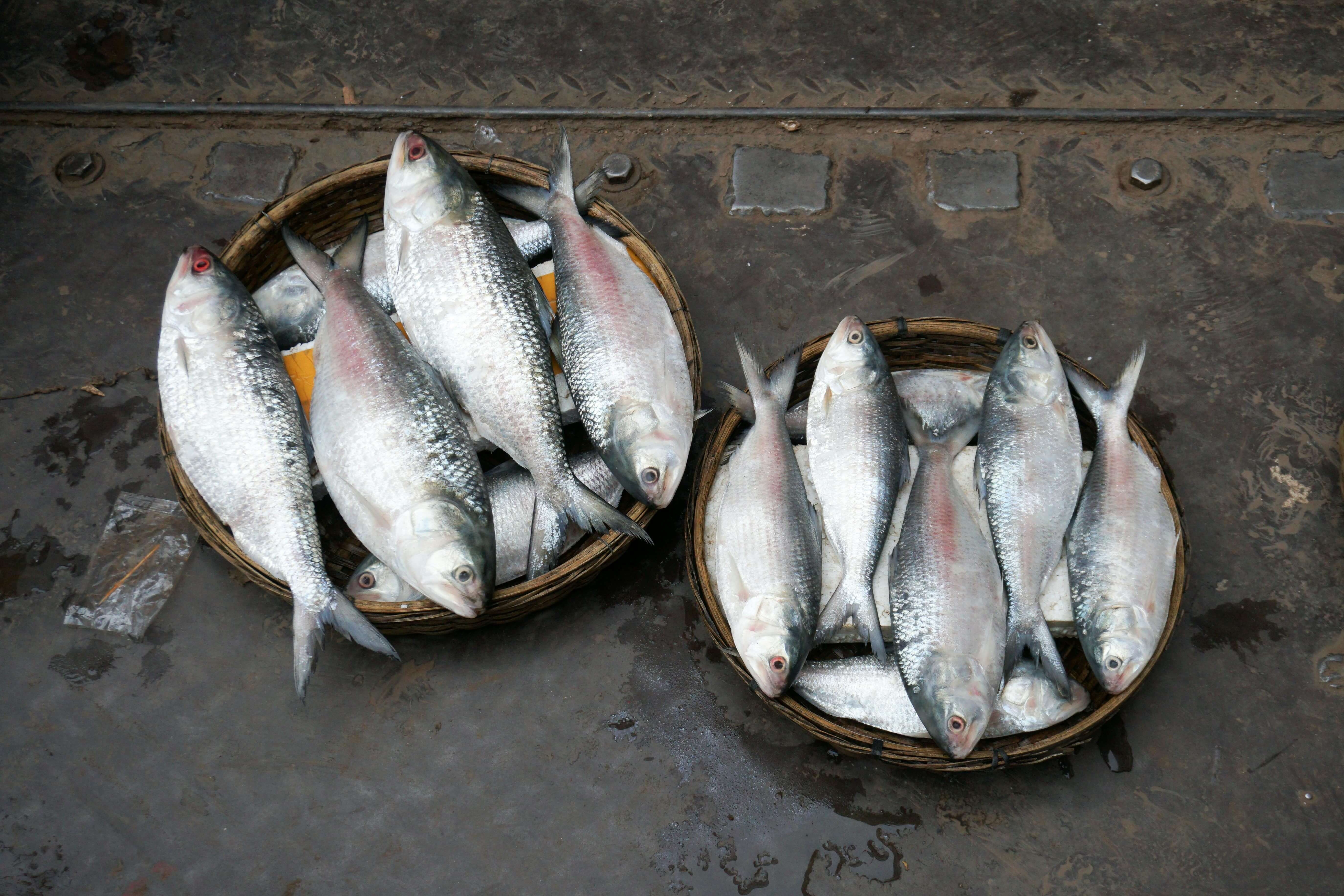
The Hilsa fish (Tenualosa ilisha) is an anadromous species — meaning it lives in the sea but migrates thousands of kilometers upstream into freshwater rivers to spawn. In Bangladesh, the Padma River (a distributary of the Ganges) is particularly famous for producing the most flavorful and oily Hilsa, which Bengalis call "Ilish." The fish is deeply embedded in Bengali culture, literature, and cuisine, often celebrated in poems, songs, and festivals like "Ilish Utshob" (Hilsa Festival).
What makes Padma Hilsa unique is its distinct taste and texture. The river's current and specific mineral composition give the fish a delicate, melt-in-the-mouth quality with a high fat content that releases a rich, aromatic flavor when cooked. The most iconic dish is "Shorshe Ilish" — Hilsa cooked in a pungent mustard seed and green chili paste, wrapped in a banana leaf or cooked in a traditional earthen pot (handi). Other popular preparations include Ilish bhapa (steamed), Ilish paturi (grilled in banana leaf), and Ilish macher tel (fried Hilsa served with its own spiced oil).
Bangladesh applied for GI registration for "Padma Ilish" in 2017, and it was granted in 2018. This certification is critical because neighboring countries, particularly Myanmar and India's West Bengal, also produce Hilsa. However, only Hilsa caught from the Padma River within Bangladesh's territorial waters can legally be marketed as "Bangladeshi Padma Ilish." The GI tag helps prevent mislabeling and ensures premium pricing in international markets.
Hilsa contributes about 1% to Bangladesh's total GDP and employs over 2.5 million fishermen directly and indirectly. However, overfishing, climate change, and river pollution have threatened Hilsa stocks. The government has imposed annual fishing bans during peak breeding seasons (usually October-November), established sanctuaries, and provided alternative income support to fishermen. These measures have increased Hilsa production from 2.97 lakh metric tons in 2003 to over 5.5 lakh metric tons in recent years. The GI status has also boosted exports to India, the UK, the USA, and the Middle East, where expatriate Bengalis pay premium prices for authentic Padma Ilish.