
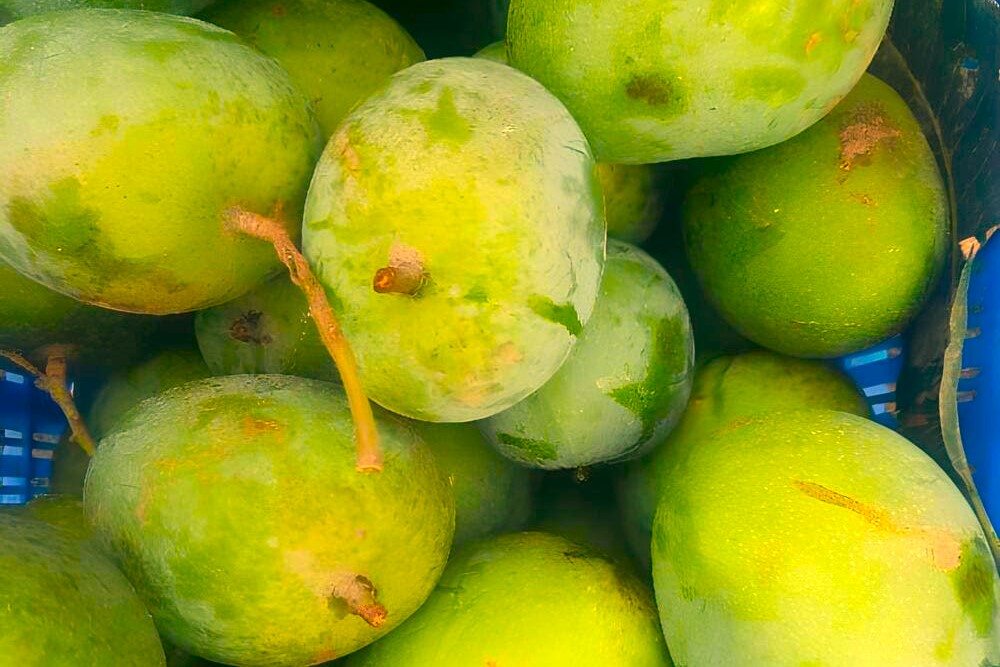
Khirsapat mango (also known as Lakshmanbhog in some regions) is a premium mango variety grown almost exclusively in the Chapai Nawabganj district of Bangladesh, along the banks of the Mahananda and Ganges rivers. The name "Khirsapat" translates to "milk juice" — an apt description because the mango is exceptionally juicy, fiberless, and has a creamy, custard-like texture with a delicate honey-like sweetness. Unlike the more fibrous Langra or Himsagar varieties, Khirsapat melts entirely in the mouth, leaving almost no fiber behind.
The unique qualities of Khirsapat come from the region's specific agro-climatic conditions: the riverine alluvial soil rich in calcium and potassium, combined with moderate humidity and distinct summer temperatures (35-40°C) that concentrate sugars. The mangoes are typically harvested in late June to early July, with a very short shelf life of only 3-5 days. This fragility means that traditionally, Khirsapat was consumed locally or in nearby cities like Rajshahi and Dhaka. Only with modern refrigerated logistics can it now be exported.
Historically, the mango orchards of Chapai Nawabganj (then part of the Malda district of undivided Bengal) were established by the Nawabs of Bengal in the 18th century. The Khirsapat variety was reportedly a favorite of the British Viceroys. After partition, many orchards were abandoned, but in the 1990s, the Bangladesh government launched a "Mango Rejuvenation Project," providing high-yielding grafted saplings and training farmers in organic pest management.
Bangladesh filed for GI registration for "Chapai Nawabganj Khirsapat" in 2019, and it was approved in 2021. This protects the name from being used by mango growers in India's West Bengal or other districts of Bangladesh. Since obtaining GI status, Khirsapat exports to the UK, Italy, and the Gulf countries have increased by over 200%. However, challenges remain: post-harvest losses are still high (up to 30% due to bruising), and small farmers struggle to afford cold storage. The government is now building pack-houses with ripening chambers near the orchards. If successful, Khirsapat could become Bangladesh's signature export fruit, rivaling India's Alphonso or Pakistan's Chaunsa.