
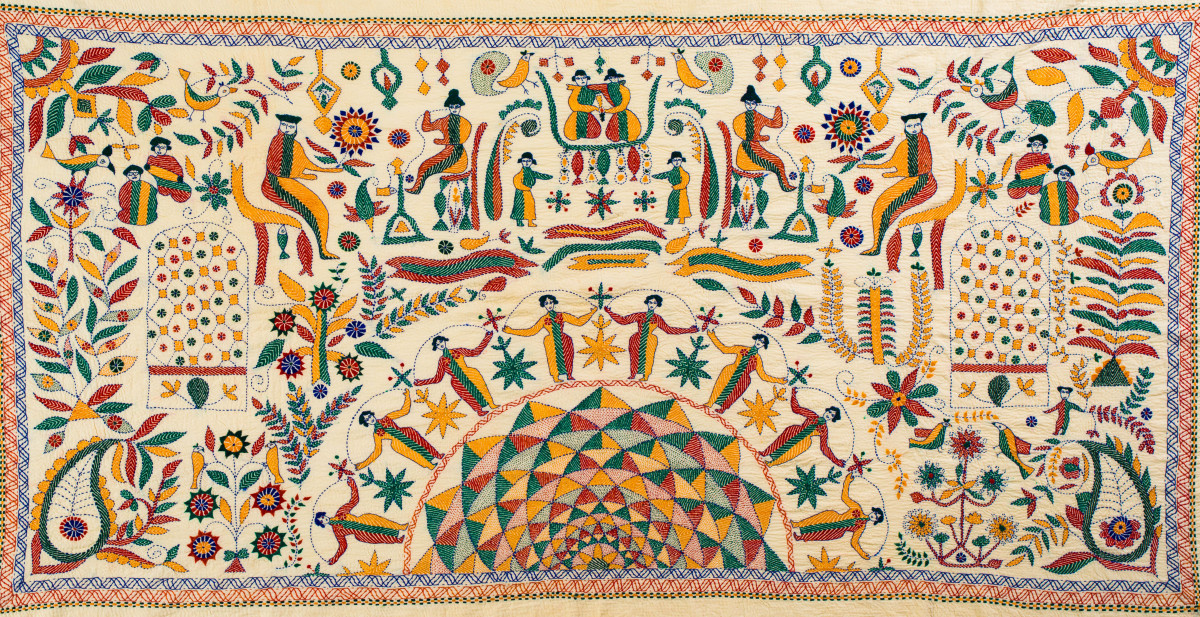
Nakshi Kantha is a traditional embroidered quilt or throw made from recycled, layered old cotton saris, lungis, and dhotis, primarily stitched by rural women in the districts of Mymensingh, Jamalpur, Faridpur, Jessore, and Rajshahi. The term "Nakshi" comes from the Bengali word "naksha" (pattern/design), and "Kantha" refers to the running stitch. Unlike ordinary quilts, Nakshi Kantha is characterized by elaborate, dense embroidery that covers the entire surface, with motifs ranging from simple geometric borders to complex narrative scenes depicting rural life, mythical stories, flowers, birds, and even the weaver's personal dreams.
The tradition is believed to be over 500 years old, with the earliest written reference found in the medieval poem "Sri Krishna Kirtana." However, Nakshi Kantha gained global recognition through the works of Nobel Laureate Rabindranath Tagore and artist Zainul Abedin, who celebrated it as a form of feminine folk art. Each Kantha is unique because the woman stitches her own story, aspirations, and memories. Common motifs include the "lotus" (symbol of creation), the "tree of life," the "sun" (masculine energy), and the "boat" (journey of life).
The process is incredibly labor-intensive. A standard double-bed size Kantha (6x8 feet) requires layering 4-7 old saris, then outlining the design using a needle and thread. The actual embroidery uses a simple running stitch ("kantha stitch"), but the density is so high that the final piece feels like a single piece of embroidered fabric, not multiple layers. A single Kantha can take 6 months to 2 years to complete, depending on the complexity. In 2020, the Bangladesh government granted GI status to "Nakshi Kantha" from the Mymensingh-Jamalpur region specifically.
The GI tag has helped differentiate authentic, hand-stitched Nakshi Kantha from cheap, machine-made imitations produced in China and India, which are often sold as "handicrafts." Exports have grown significantly, particularly to the USA, UK, Canada, and Japan, where Nakshi Kantha is valued as sustainable art. NGOs like Aarong (a Bangladeshi fair-trade brand) have organized rural women into cooperatives, providing them with training, design inputs, and direct export access. However, challenges remain: the average age of Kantha artists is over 55, and younger women prefer garment factory jobs that offer immediate cash. The government is now integrating Nakshi Kantha into school curricula in rural areas to preserve this art form. If successful, Nakshi Kantha will continue to tell Bangladesh's stories to the world.